
Getting sober is one thing. Staying sober is something else entirely.
In the beginning, sobriety can feel like a decision you make hour by hour, sometimes minute by minute. You remove the alcohol, avoid the obvious triggers, change your routines, and do whatever you need to do to get through the early days without picking up a drink. That part matters. It matters deeply. But anyone who has been sober for more than a few weeks knows that quitting alcohol is not the end of the journey. In many ways, it is the beginning.
That is where Stoic Sobriety comes in.
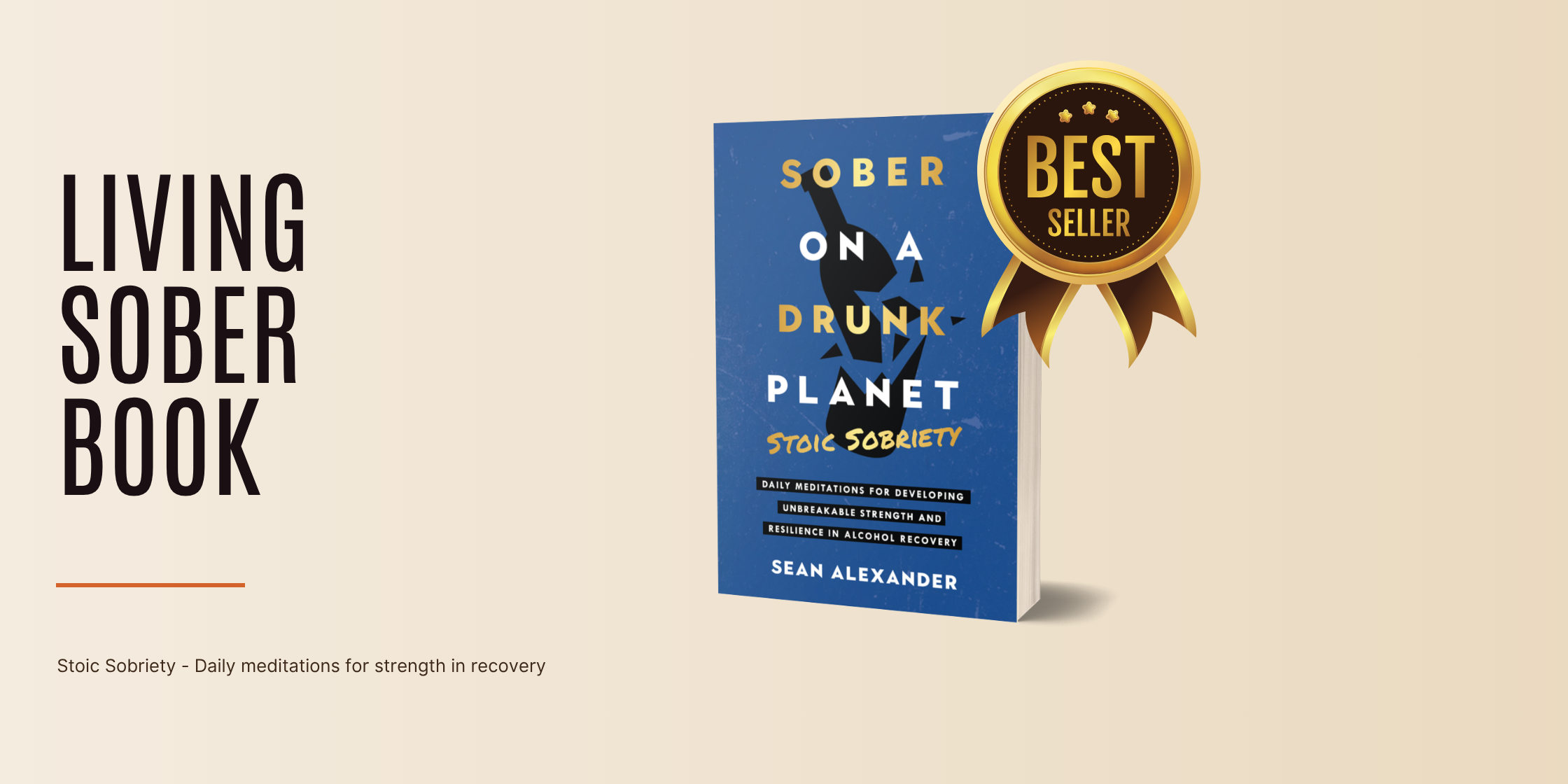
Stoic Sobriety: Daily Meditations For Developing Unbreakable Strength And Resilience In Alcohol Recovery was written for the part of sobriety that people do not always talk about enough. The long game. The emotional work. The uncomfortable days. The ordinary Tuesday afternoon when nothing dramatic has happened, but your mind still wants to escape itself. The moment when someone says something that presses every button you have, and your old self would have used it as an excuse to drink, lash out, disappear, or hit the big red “fuck it” button.
Staying sober is not just about avoiding alcohol. It is about learning how to live without needing alcohol as your escape route.
That is why Stoicism fits so naturally with sobriety. The ancient Stoics were not writing for people who lived easy, peaceful, perfectly controlled lives. They were writing about pain, fear, uncertainty, grief, anger, temptation, ego, loss, discipline, and how to remain steady when life does not go the way you wanted it to. In other words, they were writing about the exact things that test sobriety.
Epictetus said, “It’s not what happens to you, but how you react to it that matters.” That single idea could sit at the centre of almost every sober life. You cannot control every craving. You cannot control every social invite, every difficult conversation, every stressful workday, every family trigger, every moment of loneliness, or every uncomfortable emotion that rises up in your body. But you can learn to control your response. You can learn to pause before reacting. You can learn that an urge is not an instruction. You can learn that discomfort is not danger. You can learn that you do not have to destroy yourself just because life feels difficult.
That is the real work of staying sober.
Why Staying Sober Requires More Than Willpower
A lot of people think sobriety is about willpower. They imagine someone white-knuckling their way through life, gripping a glass of sparkling water at a wedding while secretly suffering through every second of it. And yes, in early sobriety, there may be moments where you do have to grit your teeth and get through a craving, an awkward event, or the social pressure of people who seem strangely offended by the fact you are not drinking poison with them.
But willpower alone is not enough for long-term sobriety.
Willpower gets tired. Willpower has bad days. Willpower disappears when you are hungry, angry, lonely, stressed, anxious, resentful, bored, or convinced that one drink would somehow be a good idea despite all the evidence from your own life suggesting otherwise.
What you need is a stronger internal framework.
That is what Stoic Sobriety offers. It gives you a way to think, reflect, and respond to life without relying on alcohol to soften every edge. It helps you develop the kind of inner strength that is built slowly through daily practice, not motivational hype. Stoicism does not tell you life will be easy. It tells you life will be life, and your job is to meet it with courage, discipline, wisdom, and self-command.
Marcus Aurelius wrote, “You have power over your mind — not outside events. Realize this, and you will find strength.”
That is not just a nice quote to put over a picture of a mountain. It is a practical sober living principle. You do not have power over the fact that alcohol is everywhere. You do not have power over other people’s opinions. You do not have power over every stressful event, every bad mood, every memory, every regret, or every person who thinks you are boring because you no longer want to ruin your weekend for the sake of fitting in. But you do have power over the next choice you make.
And sobriety is built there.
In the next choice.
Sobriety Is A Practice, Not A Personality
One of the reasons Stoic Sobriety is different from many sobriety books is that it does not treat sobriety as a personality transplant. You do not have to become a perfect person, a spiritual guru, an ultra-marathon runner, or someone who starts every morning drinking celery juice while talking about gratitude in a way that makes everyone around you want to leave the room.
Sobriety is not perfection.
Sobriety is practice.
That means you are allowed to have bad days. You are allowed to feel irritated. You are allowed to grieve the old life while still knowing it was destroying you. You are allowed to feel bored, restless, angry, sad, lonely, or overwhelmed without deciding those feelings mean sobriety is not working. They may actually mean sobriety is working, because you are finally feeling the emotions alcohol used to numb.
The Stoics understood this. They did not teach people to avoid discomfort. They taught people how to meet discomfort without being controlled by it.
Seneca wrote, “We suffer more often in imagination than in reality.” Anyone who has experienced alcohol anxiety, Sunday fear, or the mental chaos of early sobriety will understand that line. The mind can become a torture chamber when it is left unchecked. It can drag you into the past, terrify you about the future, and convince you that a temporary feeling is a permanent truth. Stoic practice helps you step back from that noise and ask a better question: what is actually happening right now, and what is within my control?
That question can change everything.
Because in sobriety, the danger is rarely just the emotion itself. The danger is believing you have to obey it.
The Urge Is Not The Action
This is one of the most important ideas for staying sober: the urge is not the action.
A craving can appear without you needing to follow it. A thought can pass through your mind without becoming a decision. A feeling can rise in your body without becoming your identity. You can feel angry and not lash out. You can feel anxious and not drink. You can feel lonely and not text someone toxic from your past. You can feel uncomfortable and still stay sober.
That separation between feeling and action is where freedom begins.
In active addiction, there is often no gap. Feeling becomes action almost instantly. Stress appears, and you drink. Shame appears, and you drink. Boredom appears, and you drink. Celebration appears, and you drink. Friday appears, and you drink. The emotional weather changes slightly, and alcohol becomes the answer to every question.
Stoic Sobriety helps create the gap.
It teaches you to pause, observe, question, and choose. That may sound simple, but simple does not mean easy. In fact, the simplest things are often the hardest to practise because there is nowhere to hide. You either pause or you react. You either choose or you repeat the old pattern. You either build the new sober identity or you return to the one that was slowly taking everything from you.
Epictetus said, “No man is free who is not master of himself.”
That is sobriety in one sentence.
Because what is freedom if alcohol still decides how your weekend goes? What is freedom if your mood is controlled by hangovers? What is freedom if your money disappears into nights you can barely remember? What is freedom if you keep making promises to yourself and breaking them by Friday?
Staying sober is not about restriction. It is about reclaiming self-command.
Why Stoicism Helps With Emotional Sobriety
A lot of people stop drinking and then realise alcohol was not the only problem. It was just the thing covering everything else.
Without alcohol, emotions can feel louder. Resentments surface. Anxiety becomes harder to ignore. Old memories come back. Relationships change. Boredom feels uncomfortable. You may start noticing how often you used alcohol to avoid telling the truth, setting boundaries, dealing with stress, or sitting quietly with yourself.
This is where emotional sobriety becomes important.
Emotional sobriety is the ability to stay steady without needing to escape every uncomfortable feeling. It does not mean you never get angry, upset, jealous, anxious, or fearful. It means those emotions no longer automatically drive the car while you sit in the back wondering how you ended up outside the pub again.
Stoicism is brilliant for this because it gives you a practical way to examine emotions without becoming them. It asks you to slow down. It asks you to separate the event from your judgement about the event. It asks you to notice where your ego is involved, where your expectations are unrealistic, and where you may be giving away control to things outside yourself.
Marcus Aurelius wrote, “If you are distressed by anything external, the pain is not due to the thing itself, but to your estimate of it — and this you have the power to revoke at any moment.”
That is not always easy to accept, especially when you are annoyed, hurt, tired, or convinced that everyone else is the problem. But it is useful. And sobriety needs useful more than it needs fluffy.
If someone questions why you are not drinking, you can take it personally, or you can see it as their discomfort, not yours. If you feel bored on a Friday night, you can panic and romanticise the pub, or you can remember that boredom will pass and a hangover would last much longer. If someone from your old life tries to pull you back into chaos, you can feel the emotional tug without obeying it.
That is emotional sobriety in practice.
Not perfect calm.
Practised control.
A Sober Life Built On Values
One of the quiet strengths of Stoicism is that it asks you to live by values rather than impulses.
That matters because addiction is often impulse-led. The impulse to escape. The impulse to numb. The impulse to chase pleasure. The impulse to avoid pain. The impulse to say yes when every honest part of you knows you should say no.
Sobriety invites a different question: what kind of person do I want to become?
Not what do I feel like doing right now?
Not what will make this discomfort disappear immediately?
Not what will help me fit in tonight?
But what kind of life am I actually trying to build?
That is where staying sober becomes bigger than not drinking. It becomes about identity. Discipline. Self-respect. Health. Relationships. Purpose. Courage. It becomes about becoming someone who keeps promises to themselves. Someone who can be trusted. Someone who no longer needs chaos to feel alive.
Zeno said, “Well-being is realized by small steps, but is truly no small thing.”
That is exactly how sobriety works. It is not usually built through one grand heroic moment. It is built in small steps repeated daily. Saying no. Going to bed sober. Waking up clear. Moving your body. Eating better. Repairing relationships. Saving money. Reading something useful. Taking a breath before reacting. Leaving the event early. Being honest. Asking for help. Doing the boring things that slowly become the foundation of a life you do not want to escape from.
That is why Stoic Sobriety is structured as daily meditations. Staying sober is not something you read once and complete. It is something you return to. It is daily reps. A mind gym. A steady practice of reminding yourself who you are now, what matters, and why the old life is no longer an option.
Why This Book Is For People Who Want To Stay Sober, Not Just Stop Drinking
There are many books that can help you quit drinking, and the first decision to stop is obviously huge. But Stoic Sobriety is especially useful for the next stage: staying sober when the novelty has worn off and real life has returned.
Because real life does return.
Work stress returns. Family stress returns. Money worries return. Health issues return. Awkward social situations return. Grief, boredom, loneliness, anger, and uncertainty all return. The difference is that now you are facing them without alcohol, which is both terrifying and liberating.
This is why people looking for books for staying sober often need something deeper than encouragement. They need something they can use when life gets messy. They need perspective. They need reminders. They need a way to stop one difficult moment from becoming a relapse. They need to understand that every sober response is strengthening the person they are becoming.
Stoic Sobriety gives you that framework.
It does not promise that life will stop being difficult. It helps you become someone who can handle difficulty without self-destructing.
That is a very different thing.
And probably a much more honest one.
Staying Sober In A Drunk Planet
We live in a world where alcohol is attached to almost everything. Birthdays, weddings, funerals, Christmas, holidays, work events, sport, dating, Friday nights, bad days, good days, sunny days, rainy days, and sometimes just the fact that it is 6pm and someone has opened a bottle. Alcohol is so normalised that not drinking can feel stranger than drinking something that makes you anxious, tired, skint, bloated, regretful, and useless for half the week.
That is why sober living needs more than motivation.
You need a way of seeing the world clearly.
Stoicism helps with that because it teaches you not to blindly follow the crowd. It teaches you to question what is considered normal. It teaches you to examine your own behaviour. It teaches you to live deliberately rather than unconsciously.
In a drunk world, that matters.
Because staying sober often means going against the grain. It means being misunderstood sometimes. It means saying no when everyone else says yes. It means leaving early. It means choosing sleep over chaos. It means accepting that some people preferred the version of you who drank because that version made them more comfortable.
Stoicism gives you a backbone for that.
Not an aggressive one. Not a preachy one. Just a quiet internal strength that says: I know what I am doing, I know why I am doing it, and I do not need everyone else to understand.
That kind of strength is priceless in sobriety.
Is Stoic Sobriety One Of The Best Sobriety Books For Staying Sober?
Of course, I am biased.
But if you are looking for a sobriety book that goes beyond the early decision to quit drinking and helps you develop the mindset, discipline, emotional resilience, and daily reflection needed for staying sober, Stoic Sobriety is a strong place to start.
It is not a book about pretending life is easy. It is not a book about becoming perfect. It is not a book about judging people who still drink. It is a book about building inner strength in a world that constantly offers escape.
For the sober curious, it can help you understand why alcohol may not be giving you what you think it is giving you.
For the newly sober, it can help you stay grounded when everything feels unfamiliar.
For the long-term sober, it can act as a daily reminder that sobriety is not just something you achieved once, but something you continue to practise as life changes.
And for anyone who has ever thought, “I know I don’t want to go back, but I need help staying steady,” this book was written for that exact place.
A Final Thought On Staying Sober
The longer you stay sober, the more you realise sobriety is not just about alcohol.
It is about how you respond to life.
It is about what you do with pain.
It is about whether you keep your promises to yourself.
It is about whether you live by impulse or values.
It is about whether you keep escaping yourself or finally learn how to sit with yourself long enough to heal.
Stoicism and sobriety meet in that space. Both ask you to stop giving your power away. Both ask you to take responsibility for your choices. Both ask you to accept what you cannot control and act with courage on what you can.
That is why Stoic Sobriety has helped so many people who are not just trying to quit drinking, but trying to stay sober and build a better life.
Because at some point, sobriety stops being about what you have lost.
It becomes about the strength you are building.
And that strength, built one sober day at a time, can change everything.
Read Stoic Sobriety
If you are looking for one of the best sobriety books for staying sober, emotional resilience, and sober living in the real world, Stoic Sobriety is here to help you stay steady when life gets messy.
Read Stoic Sobriety here:
Stoic Sobriety
You can also explore the full Sober On A Drunk Planet series here:
Explore the Series
Stoic Sobriety is about using ancient Stoic wisdom to help you stay sober, build resilience, manage difficult emotions, and live with more calm and self-control. It is not just about quitting alcohol. It is about learning how to respond to life without needing alcohol as an escape route.
It can help with both, but it is especially useful for staying sober. If you are newly sober, sober curious, or already alcohol-free, the book gives you daily reflections to help you stay steady when life feels stressful, uncertain, boring, emotional, or overwhelming.
Stoicism works well with sobriety because it focuses on what you can control: your thoughts, choices, reactions, habits, and behaviour. In sobriety, you cannot control every craving, trigger, social situation, or difficult day, but you can learn to pause, respond differently, and stop giving alcohol power over your life.
No. Stoic Sobriety is based on Stoic philosophy, not religion. It can work alongside your own faith, spiritual beliefs, recovery programme, or personal view of a higher power. The main focus is on practical wisdom, self-command, resilience, and living sober one day at a time.
Stoic Sobriety is best for anyone who wants help staying sober and building emotional strength. It is especially useful if you have stopped drinking but still struggle with stress, anger, anxiety, cravings, old patterns, emotional reactivity, or the question of how to live sober in the real world.
Yes, although if you are in the very early stages of quitting alcohol and feel physically dependent, you should speak to a medical professional first. Once you are safe, Stoic Sobriety can help you build daily mental strength, reflect on your choices, and stay connected to why sobriety matters.
Many sobriety books focus mainly on why alcohol is harmful or how to stop drinking. Stoic Sobriety focuses more on the daily practice of staying sober. It uses Stoic principles to help you build discipline, emotional resilience, patience, perspective, and a stronger sober identity.
It can help you change how you respond to cravings. A craving is not an instruction. It is a feeling that rises, peaks, and passes. Stoic thinking helps create a gap between the urge and the action, which is one of the most important skills in staying sober.
No. You do not need any background in philosophy. The book is written for people in sobriety who want practical reflections they can actually use, not a heavy academic explanation of ancient philosophy.
Yes. Stoic Sobriety is part of the Sober On A Drunk Planet series by Sean Alexander. It can be read on its own, but many readers start with Giving Up Alcohol first and then use Stoic Sobriety for daily support and long-term sober living.
If you are new to the series, the best place to start is usually Sober On A Drunk Planet: Giving Up Alcohol. If you are already sober and want daily support for staying sober, emotional control, and resilience, Stoic Sobriety is a great next step.
You can buy Stoic Sobriety through Amazon and other book platforms, depending on your country. You can also visit the main Sober On A Drunk Planet books page to find the full series and choose the right book for where you are in your sober journey.