
If you are searching for how to stop drinking alcohol, there is a good chance you already know alcohol is costing you more than it gives you.
Maybe you are tired of waking up with anxiety after saying too much, spending too much, or remembering too little. Maybe you have tried to cut down more times than you can count. Maybe you have promised yourself you would only drink at weekends, only drink on special occasions, only have a few, only drink beer, only drink after 7pm, or any of the other little contracts we make with ourselves when we are trying to control something that quietly keeps controlling us.
The hard truth is that most people do not start searching for sobriety advice when everything is going brilliantly. They search when something inside them is starting to say, “This isn’t working anymore.”
That is the perfect place to begin.
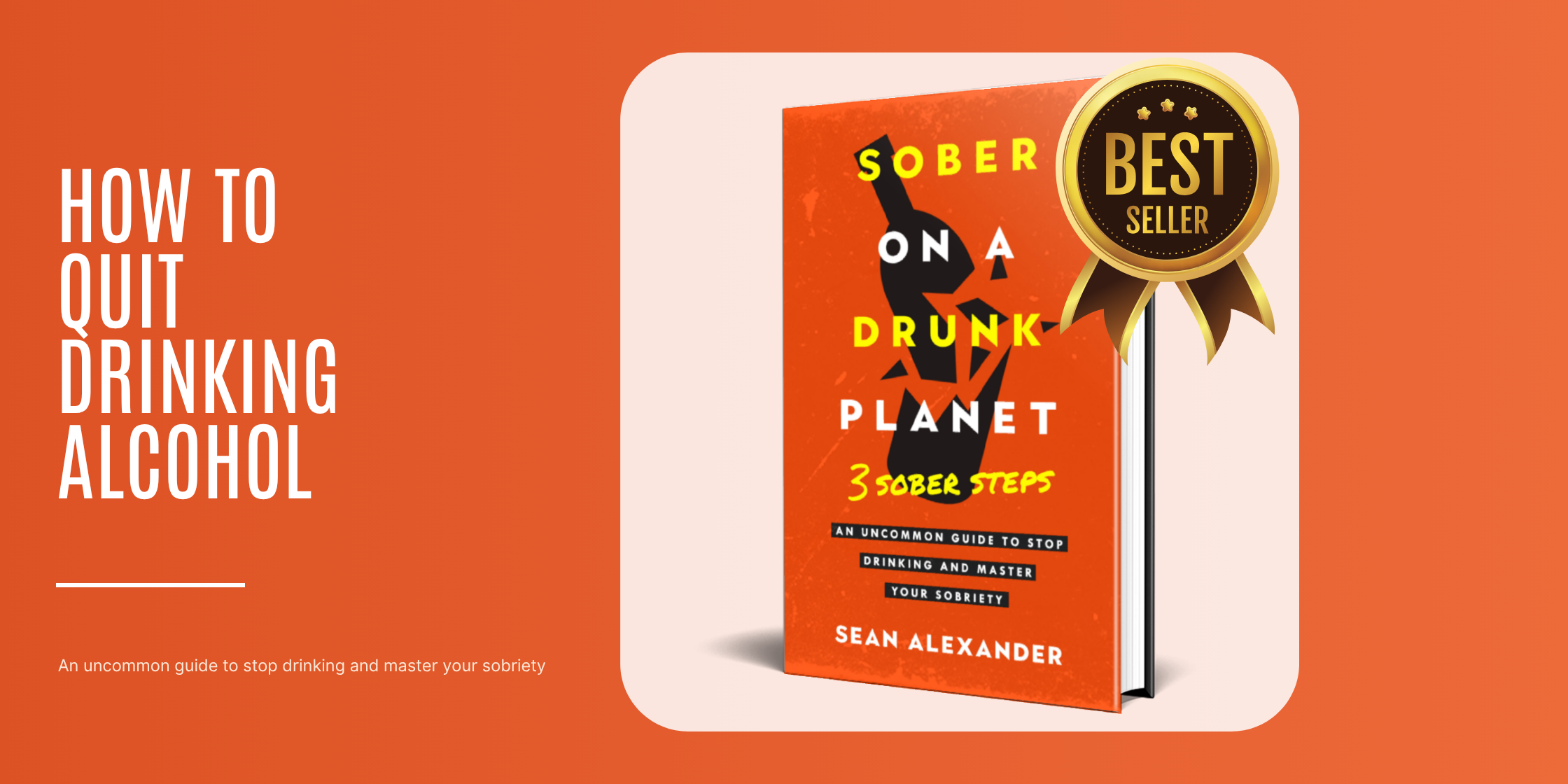
Sober On A Drunk Planet: 3 Sober Steps was written for that exact moment. It is for people who are questioning alcohol, trying to quit alcohol, newly sober, stuck in the stop-start cycle, or already sober but wondering why life still feels emotionally messy without the drink.
Because stopping drinking is not just about removing alcohol.
It is about understanding yourself, taking better action, and slowly learning how to trust your own inner guidance again.
That is what the three sober steps are really about.
Self-awareness. Positive action. Intuition.
Not as fluffy ideas. Not as motivational wallpaper. But as a practical way to stop drinking alcohol and build a sober life that does not collapse the moment stress, boredom, cravings, social pressure, or difficult emotions turn up.
Important: Speak To A Medical Professional Before Stopping Suddenly
Before making any sudden changes to your drinking, especially if you drink heavily, drink daily, or feel physically dependent on alcohol, please speak to a doctor, GP, alcohol support service, or qualified medical professional.
Alcohol withdrawal can be dangerous and, in some cases, life-threatening. Withdrawal symptoms can include shaking, sweating, nausea, vomiting, anxiety, agitation, insomnia, headaches, increased heart rate, high blood pressure, confusion, hallucinations, seizures, and delirium tremens. Severe symptoms such as seizures, fits, severe confusion, hallucinations, fever, or extreme agitation need urgent medical attention. The NHS advises getting medical help before trying to stop drinking if you experience withdrawal symptoms, and calling emergency services if severe withdrawal symptoms occur.
The information in this article and in 3 Sober Steps is for education and personal reflection. It is not medical advice, and it should not replace professional support. Sobriety is powerful, but safety comes first.
Why “How Can I Quit Alcohol?” Is The Wrong Question To Ask On Its Own
“How can I quit alcohol?” is a perfectly normal question, but it is only the start of the conversation.
The better question is probably: “Why do I keep going back to alcohol when part of me knows it is making my life worse?”
That is where things get more honest.
Most people have enough information to know alcohol is not exactly a health drink. Nobody wakes up after a heavy night out and thinks, “Wonderful, my body feels nourished.” The headache, anxiety, tiredness, shame, nausea, poor sleep, terrible food choices, and strange emotional fragility are usually fairly strong clues that alcohol is not doing your mind, body, or soul many favours.
But information alone does not always change behaviour.
You can know alcohol is hurting you and still drink.
You can know hangovers ruin your week and still drink.
You can know moderation never really works for you and still try it again.
That is why 3 Sober Steps starts with self-awareness. Before you can change your relationship with alcohol, you have to understand the relationship properly. Not the version you tell other people. Not the version your friends laugh about. Not the version that says you are “just having fun.” The real version.
The one that asks: what is alcohol giving me, what is it taking from me, and why do I keep choosing it?
As Viktor Frankl said, “When we are no longer able to change a situation, we are challenged to change ourselves.”
Sobriety often begins in that challenge. You may not be able to make alcohol work differently for you. You may not be able to become the mythical moderate drinker you have tried to become for years. You may not be able to control what other people do, what they think, or how much society worships drinking. But you can change your response. You can change your choices. You can change your life.
Step One: Self-Awareness
Self-awareness is where sobriety becomes personal.
It is the point where you stop asking whether alcohol is bad in general and start asking what alcohol is doing to you.
That difference matters. Because alcohol does not affect everyone in the same way. Some people can have one glass of wine and forget about the bottle. I have never understood these people and remain suspicious of them. For others, one drink wakes up the part of the brain that wants ten more, a takeaway, a taxi, an argument, a bag of drugs, or a mystery card payment at 2:43am that looks like it was made by someone else entirely.
Self-awareness helps you stop hiding behind the idea of “normal drinking” and start looking at your own evidence.
What happens when you drink?
Do you control it, or does it control you?
How often do you break your own rules?
How much money does it really cost you?
What happens to your mental health afterwards?
What does alcohol do to your relationships, sleep, confidence, motivation, body, work, parenting, fitness, finances, and self-respect?
These are not easy questions, but they are necessary ones.
In 3 Sober Steps, self-awareness is not about beating yourself up. Shame does not create lasting change. If it did, most people with drinking problems would have been cured by Monday morning years ago. Self-awareness is about seeing clearly. It is about noticing patterns, triggers, emotional reactions, old beliefs, and the ways alcohol has quietly become attached to your identity.
Many people drink because they think alcohol helps them relax, connect, celebrate, cope, sleep, feel confident, or escape. But when you look closer, alcohol often creates the very things you are trying to get away from. It promises confidence but leaves you anxious. It promises connection but damages relationships. It promises relief but adds more stress. It promises fun but takes your mornings, weekends, money, and mental health.
That is usually when the sober tipping point begins.
The negatives finally outweigh the positives.
And once you see that clearly, it becomes harder to unsee.
Step Two: Positive Action
Self-awareness matters, but awareness on its own is not enough.
At some point, you have to do something different.
This is where positive action comes in. Not massive dramatic life changes that make you feel overwhelmed by Tuesday. Not suddenly deciding you are going to quit alcohol, run an ultra-marathon, wake up at 4am, start meditating for three hours, eat only organic lentils, and become a completely different human being before the weekend.
Positive action is usually much simpler than that.
It is going to bed sober tonight.
It is removing alcohol from the house.
It is telling someone you trust that you are taking a break.
It is planning what you will drink at a social event before you get there.
It is leaving early.
It is going for a walk when a craving hits.
It is eating properly, drinking water, moving your body, and getting enough sleep.
It is putting your phone down instead of scrolling yourself into a comparison spiral.
It is doing the next right thing, even when your old self wants the old escape.
The problem with alcohol is that it trains you to think relief should be immediate. Stress appears, and alcohol offers a fast escape. Boredom appears, and alcohol offers stimulation. Anxiety appears, and alcohol offers a temporary softening. But the bill always arrives later, usually with interest, and often at 4am when your brain decides to replay your entire life like a horror film with no skip button.
Positive action teaches you to live differently. You start choosing things that make tomorrow better, not just things that numb tonight.
This is where the benefits of stopping drinking start to become real.
When you stop drinking alcohol, sleep often improves. Energy returns. Anxiety reduces. Skin looks better. Your body starts recovering. Your mind becomes clearer. You save money. You stop losing days to hangovers. You become more consistent. You start keeping promises to yourself. You begin to trust yourself again.
And trust is everything.
Because when you have spent years breaking promises to yourself, sobriety becomes the process of rebuilding that relationship one sober day at a time.
Step Three: Intuition
Intuition might sound like the strangest of the three sober steps, but it is one of the most important.
When you are drinking heavily, using drugs, gambling, numbing, people-pleasing, avoiding, or living in chaos, your intuition gets buried under noise. You stop hearing the quiet voice that tells you something is wrong. Or you hear it, but you drown it out. You feel the gut instinct that says, “This is not the life I want,” but then Friday arrives and the old cycle starts again.
Sobriety brings that voice back.
At first, it can be uncomfortable. Clarity is not always pleasant when you have spent years avoiding the truth. You may suddenly realise certain friendships only worked because of alcohol. You may realise your job is draining you. You may realise your health needs attention. You may realise you have been living for everyone else. You may realise you are not actually boring sober; you were just exhausted, anxious, and disconnected from yourself.
That is not a bad thing.
That is your intuition waking up.
Intuition in sobriety is not about becoming mystical or floating around in linen trousers pretending you have all the answers. It is about learning to listen to yourself again. It is about noticing what gives you energy and what drains it. It is about recognising when a situation is not right for you before it becomes a disaster. It is about building a life that feels aligned with who you are becoming, rather than who alcohol kept turning you back into.
The longer you stay sober, the more obvious this becomes.
Your body tells you what it needs.
Your mind gets clearer.
Your emotions become information rather than emergencies.
Your choices start feeling more deliberate.
You stop living on autopilot.
That is when sobriety becomes much bigger than not drinking.
It becomes a complete change in direction.
What Happens If You Stop Drinking Alcohol?
One of the most common search questions is: if you stop drinking alcohol, what happens?
The simple answer is that your body and mind finally get a chance to recover.
The longer answer is that the benefits show up in layers. Some changes are physical. Some are emotional. Some are financial. Some are spiritual, even if you are not a spiritual person. Some are so subtle that you do not notice them until one day you realise you have dealt with a stressful situation without self-destructing, woken up on a Sunday with actual energy, or looked in the mirror and seen someone you are starting to respect again.
When you stop drinking, your sleep may improve, although it can be unsettled at first. Your anxiety may begin to reduce as your nervous system is no longer being battered by alcohol. Your digestion, skin, blood pressure, liver function, fitness, and general health can begin to improve. You may save more money than expected, not only from the alcohol itself but from all the extra spending that tends to orbit drinking like taxis, takeaways, cigarettes, drugs, online shopping, and very questionable late-night decisions.
But the deeper changes are often the most powerful.
You get your time back.
You get your mornings back.
You get your weekends back.
You get your ability to follow through back.
You get your self-respect back.
You get your future back.
This is why sobriety can feel so surprising. At the beginning, many people think they are just removing alcohol. But over time, they realise alcohol was wrapped around almost everything. Removing it creates space, and that space can become anything: health, confidence, creativity, better relationships, fitness, business, travel, writing, golf, parenting, peace, or simply the ability to sit quietly with a cup of tea and not feel like you are crawling out of your own skin.
That might not sound exciting to someone still chasing chaos.
But to someone who has lived in the chaos, peace is a superpower.
The Benefits Of Stopping Drinking
The benefits of stopping drinking are often talked about in obvious terms: better sleep, better health, more money, fewer hangovers. Those are all true and important, but they do not fully explain why sobriety can change someone’s entire life.
The real benefit is that alcohol stops making decisions for you.
It stops deciding how you spend your weekends.
It stops deciding how much money you waste.
It stops deciding whether you exercise.
It stops deciding how anxious you feel on Monday.
It stops deciding whether you keep your promises.
It stops deciding who you spend time with.
It stops deciding whether you move towards your goals or recover from the same old night out again.
That is a huge shift.
Once alcohol is no longer in charge, you begin to discover what you actually want. Not what drunk you wanted. Not what hungover you could just about manage. Not what your drinking circle expected. What you want.
That is when people start changing careers, training again, writing, building businesses, repairing relationships, going to therapy, getting fit, saving money, travelling differently, reconnecting with family, or finally doing the thing they always said they would do.
Sobriety does not guarantee a perfect life. Nothing does. Life will still be awkward, stressful, painful, unfair, funny, weird, and occasionally ridiculous. But sobriety gives you a better chance of handling it without making everything worse.
And for many of us, that is enough to change everything.
What Sobriety Means
Another phrase people search is “sobriety means”, which makes sense because sobriety can feel like a loaded word.
For some people, sobriety means recovery.
For others, it means freedom.
For some, it means not drinking alcohol.
For others, it means no alcohol, drugs, gambling, or any behaviour that takes them away from themselves.
For me, sobriety means living consciously. It means alcohol no longer gets to pull me backwards. It means I can trust myself more than I used to. It means I can pursue the things I care about without constantly sabotaging myself. It means I can go to bed sober, wake up clear, and build a life I do not feel desperate to escape from.
That is the spirit of 3 Sober Steps.
It is not about becoming perfect.
It is about becoming aware, taking action, and learning to trust the sober version of yourself.
How To Calculate Sobriety Without Becoming Obsessed With The Number
People also search for calculate sobriety, usually because they want to know how many days, months, or years they have been sober.
Counting sober time can be powerful. It gives you evidence. It shows progress. It reminds you that the little daily choices are adding up into something bigger. There is nothing wrong with feeling proud of one day, ten days, thirty days, a year, or eight years.
But the number is not the whole story.
Sobriety is not only measured in days.
It is measured in the promises you keep. The difficult moments you get through. The mornings you get back. The times you say no when the old you would have said yes. The way your nervous system settles. The way your relationships change. The way your health improves. The way you slowly stop living in shame and start living with self-respect.
Track the days if it helps.
Celebrate them.
But do not forget to notice the life growing around them.
Sobriety Quotes That Actually Mean Something
Sobriety quotes can be useful when they are not just fluffy nonsense stuck over a sunset.
The right quote can interrupt an old pattern, remind you why you started, or give you something to hold onto during a difficult moment.
One of the quotes that fits sobriety perfectly is from Viktor Frankl: “When we are no longer able to change a situation, we are challenged to change ourselves.” For anyone who has tried and failed to make alcohol work, this is a powerful reminder. Sometimes the change is not learning how to drink differently. Sometimes the change is becoming someone who no longer drinks.
Another useful one is from Epictetus: “No great thing is created suddenly.” Sobriety is not built in one heroic moment. It is built through daily reps, small choices, boring consistency, and the willingness to keep going when the novelty wears off.
And then there is the simple truth that runs through the whole Sober On A Drunk Planet series: old ways won’t open new doors.
If you want a different life, the old loop has to break.
A Quick Note On Sobriety Tests
Because sobriety test comes up as a keyword, it is worth clarifying something.
A sobriety test is usually associated with checking whether someone is impaired by alcohol, often in a legal or driving context. That is not what 3 Sober Steps is about. This book is not about passing a roadside test. It is about taking a much more personal test: looking honestly at whether alcohol is helping or hurting your life.
That might be the more important test for many people.
Can you control your drinking once you start?
Can you stop when you say you will?
Can you enjoy life without alcohol?
Can you handle stress without reaching for a drink?
Can you keep promises to yourself?
Can you imagine your future improving if nothing changes?
Those questions may not come with flashing blue lights, but they can be life-changing if you answer them honestly.
The Quit Alcohol Timeline: What Changes Over Time?
A quit alcohol timeline can be helpful because people want to know when they will start feeling better. The exact timeline varies from person to person, and anyone who is physically dependent on alcohol should speak to a medical professional before stopping suddenly, because withdrawal can be dangerous.
But in general, people often begin noticing changes in stages.
In the first few days, the body starts adjusting. Sleep may be strange, moods may swing, cravings may appear, and your mind may try to negotiate with you like a drunk lawyer who has lost all the paperwork.
After a week or two, many people start noticing clearer mornings, more stable energy, and less physical heaviness. Anxiety may begin to ease, although emotions can also feel louder because alcohol is no longer numbing them.
After a month, the benefits often become more obvious. Sleep, skin, digestion, fitness, motivation, and mental clarity may improve. You may also start seeing how much time and money alcohol was taking.
After several months, sobriety often becomes less about avoiding alcohol and more about building a new life. This is where the three sober steps become even more important. Self-awareness helps you understand yourself, positive action helps you build momentum, and intuition helps you move towards the life that actually feels right for you.
That is the sober compound effect.
Small choices.
Repeated daily.
Life-changing over time.
Why 3 Sober Steps Is A Practical Book For People Who Want To Stop Drinking
If Giving Up Alcohol is the book that helps you rethink alcohol, 3 Sober Steps is the book that helps you start doing the work.
It covers self-awareness, goals, positive action, intuition, emotional intelligence, triggers, cravings, people, places and things, ego, gratitude, JOMO, limiting beliefs, relapse prevention, accountability, movement, nutrition, health, energy, purpose, and the bigger question of what you are going to do with the life sobriety gives you.
Because that is the question people eventually have to face.
Not just “how do I stop drinking alcohol?”
But “who am I becoming now that alcohol is no longer controlling me?”
That is why 3 Sober Steps works for people at different stages. It can help if you are sober curious, newly sober, trying again after slipping, or already sober but feeling stuck. It gives you a framework that is simple enough to remember but deep enough to keep returning to.
Self-awareness.
Positive action.
Intuition.
See the truth.
Do the work.
Trust the direction.
Read 3 Sober Steps
If you are searching for how to stop drinking alcohol, how can I quit alcohol, what happens when you stop drinking, or the benefits of stopping drinking, Sober On A Drunk Planet: 3 Sober Steps is a practical, honest, and deeper guide to help you break the drink → regret → repeat loop and build a life alcohol no longer fits into.
Read 3 Sober Steps here:
3 Sober Steps
You can also explore the full Sober On A Drunk Planet series here:
SOADP Series
Quitting alcohol usually begins with honest self-awareness, but it should also begin safely. If you drink heavily, drink every day, or experience withdrawal symptoms when you stop or cut down, please speak to a doctor, GP, alcohol support service, or qualified medical professional before stopping suddenly. Alcohol withdrawal can include shaking, sweating, anxiety, nausea, insomnia, increased heart rate, high blood pressure, confusion, hallucinations, seizures, and delirium tremens, and severe withdrawal can be dangerous. Once you are safe, 3 Sober Steps can help you look at what alcohol is costing you, where moderation has failed, what triggers your drinking, and what practical support you need to build a sober life one day at a time.
If you keep going back to alcohol, willpower alone may not be enough. You may need to understand your triggers, routines, emotions, social pressures, and beliefs around drinking. The three sober steps of self-awareness, positive action, and intuition can help you break the loop and choose differently.
When you stop drinking alcohol, your body and mind begin to recover. Many people notice better sleep, clearer thinking, more energy, improved mood, better health, more money, fewer regrets, and stronger self-respect. The exact timeline varies, and anyone physically dependent on alcohol should seek medical advice before stopping suddenly.
The benefits of stopping drinking can include improved sleep, lower anxiety, better physical health, more consistent energy, clearer skin, improved fitness, better relationships, more money, and greater confidence. Many people also find they become more productive, more present, and more connected to who they really are.
Sobriety usually means living free from alcohol or other addictive substances, but it can also mean living with more awareness, self-respect, and control. For many people, sobriety is not just about not drinking. It is about building a life they no longer want to escape from.
Yes. 3 Sober Steps is useful for early sobriety because it helps you understand why you drank, what triggers you, and what practical actions can support you. If you are physically dependent on alcohol, speak to a medical professional before stopping suddenly.
Yes. The book is not only about quitting alcohol. It also explores emotional intelligence, cravings, triggers, ego, gratitude, routines, health, accountability, and the life you build after alcohol. These are all important parts of staying sober long-term.
A quit alcohol timeline describes the changes that may happen after you stop drinking, from the first few days to several months and beyond. It can include changes in sleep, mood, energy, cravings, health, money, and mental clarity. Everyone is different, so the timeline should be used as a guide, not a rule.
3 Sober Steps is mainly for people who want to stop drinking or seriously question alcohol. If moderation has repeatedly failed or feels exhausting, the book can help you explore whether sobriety may be a better path.
If you are completely new to the series, start with Giving Up Alcohol. If you already understand that alcohol is a problem and want practical tools for stopping drinking and staying sober, 3 Sober Steps is a strong next step.